
SUMMARY
Following on from a training and development package prepared and delivered for a major Telco provider Power, this document has been put together to help identify future opportu- nities for Remotely Piloted Aircraft (RPAS), in the Telecommunications sector. We aim to identify other cases around the world where efficiences have been realised by utilising RPAS technology to improve inspections and monitoring of towers.
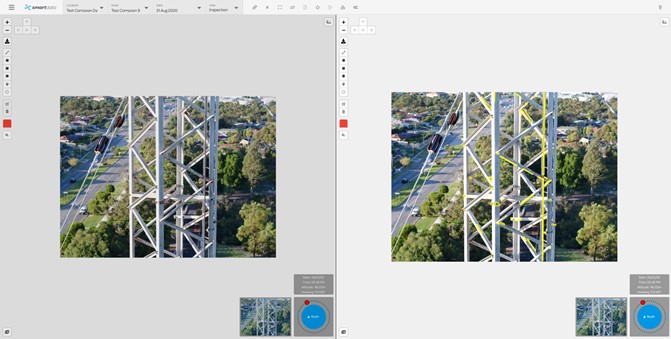
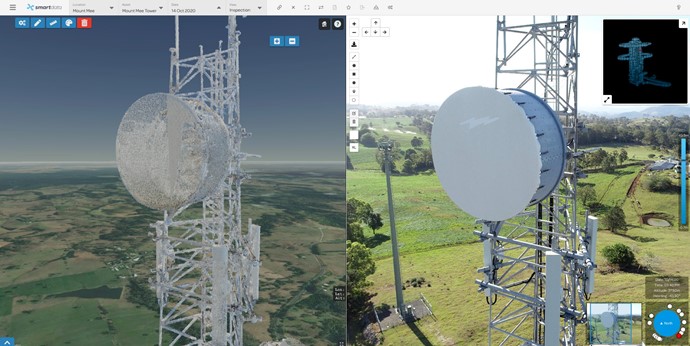
One of our original trials for a large Telco client in Australia was utilising RPAS technology to help with defect identification of structures as well as cataloging of potential areas of interest for comparison of these issues over time. This trial leveraged a combination of manual review as well as deep learning methodologies for automated identification of defects and areas of interest.
OPPORTUNITIES
The opportunties for Drones in the Telco in- dustry are plentiful. There are situations where drones will allow data to be captured in a more efficient manner, saving time and resources that can be diverted elsewhere. This can be anything from asset inventory calculations, through to asset management and condition reporting, and antenna azimuth measure- ment, as well as RF measurements.
Drones can be used to improve the reliability of data supply through condition monitoring, and fault finding on areas where supply and faults may already be identified. There is a safety realization as elevated work platforms only need to be used for repairs/installations instead of inspections.
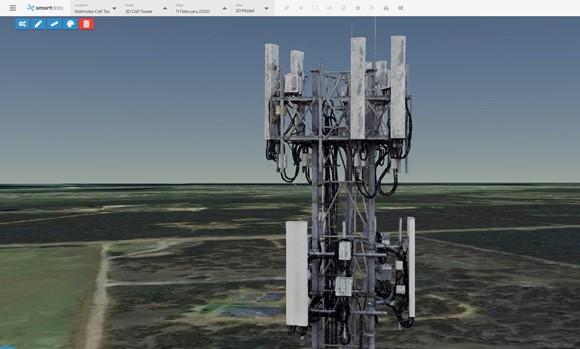
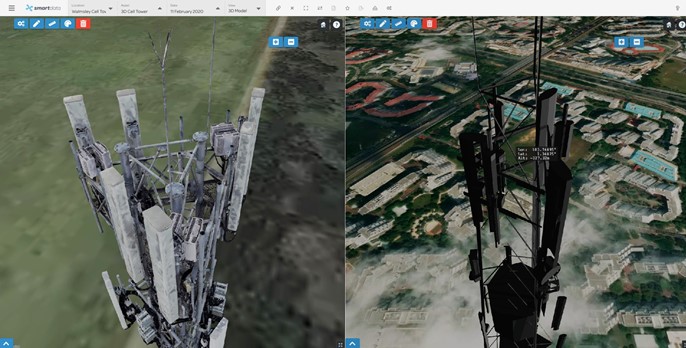
Leveraging additional technologies such as deep learning, and artificial intelligence will enable further savings, cost reductions and efficiencies to be realized, thereby enabling better outcomes for both customers, and Tel- co companies themselves. Lastly – telco pro- viders can utilize the data (in the form of 3D models, point clouds, and images) as a single source of truth for equipment which resides on a tower.
REGULATIONS
One of the current challenges preventing Drones from being utilised more regularly in Telco applications, is the requirement in Aus- tralia to keep the RPA within line of sight of the person conducting the operations. Typically, this limits the radius of operations to 300-400 metres, depending on the person’s eyesight, and size of the RPA itself.
Future iterations of the regulations, namely the manual of standards will allow drones to be operated under what’s called extended visual line of sight (EVLOS)
The updated extended visual line of sight reg- ulations allow for the RPA to be operated up to 1500 metres away from the relevant observer. There are 2 classes of EVLOS operations pro- vided for under the Manual of Standards.
There are additional opportunity sets to be realised in Telco surveys allowing more auto- mation.
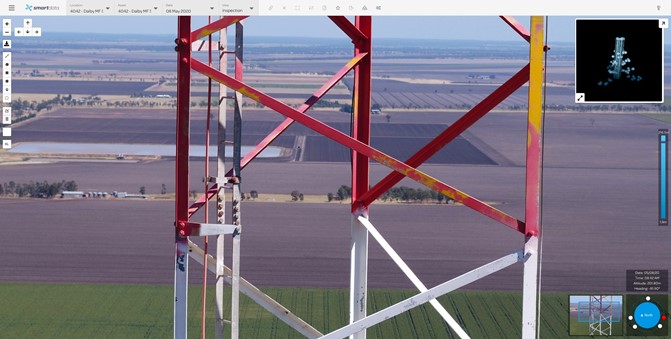
Drones have the ability to capture a higher quality dataset reapatably, generally with more information per image/scan than tradition- al methods. Valuable analytics can then be extracted from each asset, whether that be tower, mast, or other structure.
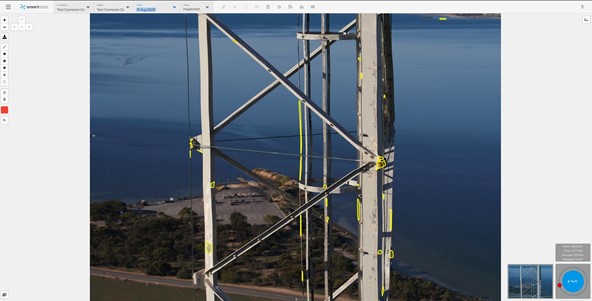
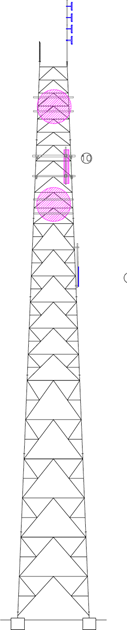
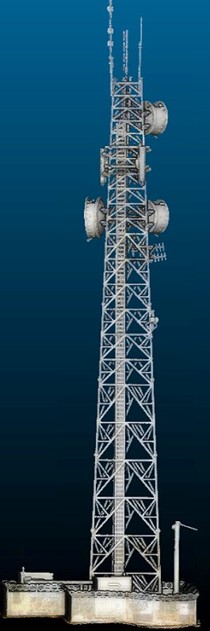
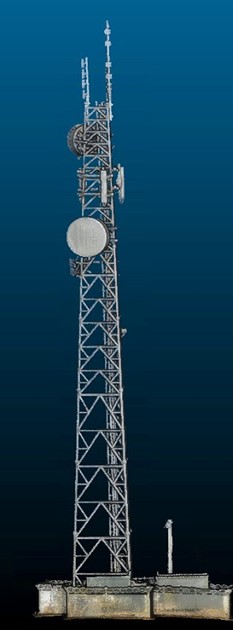
OPPORTUNITIES – TOWER INSPECTION PROGRAMSIn the past, inspection programs have been completed by riggers climbing towers, utilizing EWPs or cherry pickers to get the required inspections of towers. This is often a manual process with associated risk of people working at heights. This process is also largely subjective when it comes to data review, as one engineers view may differ from others. This is where deep learning assists decision making for telecommunication providers and infrastructure owners, as human bias can largely be removed from the model in a well trained dataset.</td> </tr> </tbody> </table>
|
 </td>
</tr>
</thead>
</table>
&&&
</td>
</tr>
</thead>
</table>
&&&