calendar_today
March 25, 2026
person
Ziemek Bućko
domainhunter
⏩
TL;DR — The 9-step email outreach process
Good sales email outreach starts with a prospecting and messaging strategy. Before you write a single word, you need to know exactly why your offer matters, who it's for, and why now is the right time for them to hear it.
This guide proposes a nine-step process for sales email outreach: build a strategy, shape a compelling offer, identify and segment your target accounts, define your buyer persona, find and verify email addresses, develop a messaging strategy, write the actual emails, personalize at scale, then send and optimize.
<p>If you’re a salesperson or a founder and you want to use email outreach for sales, this guide will get you from zero to competent. It covers everything from finding prospects to writing and sending sales emails that get positive replies. </p><p>Whether you've just landed your first sales job, starting to look for more customers as a founder, or you're an experienced salesperson looking for a second opinion on your sequence, this guide is for you.</p><p>At the start, the most important thing to remember is that most sales emails are not having a good time.</p><ul><li>The average reply rate for sales outreach is 3%.</li><li>28% of decision-makers say they never, ever receive valuable sales emails.</li><li>Their top complaints: too sales-focused (65%), irrelevant to their role (61%), generic (48%).</li></ul><p>(These datapoints come from Hunter's annual State of Email Outreach report.)</p><p>Here’s an example of how sales emails go wrong. </p><p>Imagine you’re a VP of Sales at a scaling SaaS company. You’ve been sending sales emails and managing salespeople for the last 15 years. You open your inbox and find this:</p><div class="kg-card kg-callout-card kg-callout-card-blue"><div class="kg-callout-emoji">⛔</div><div class="kg-callout-text">Subject: Quick intro — Revo
Hi Jordan,
I’m reaching out from Revo, an AI-powered sales coaching platform. We help sales teams improve performance by recording calls and providing automated feedback using our proprietary machine learning models.
Our platform integrates with all major CRMs and has been shown to reduce ramp time by up to 40%. We work with over 200 B2B companies and were recently named a G2 Leader in Sales Coaching.
Would you have 15 minutes this week for a quick demo?</div></div><p>Would Jordan, the VP of Sales, reply?</p><p>Every sentence describes the product—what it does, how it works, who uses it, and what award it won. There’s nothing about the recipient. Nothing about their team’s specific challenge. Nothing that couldn’t have been sent to 10,000 other people. Jordan closes it in two seconds.</p><p>Now imagine the same product, but the sender read this guide before sending:</p><div class="kg-card kg-callout-card kg-callout-card-blue"><div class="kg-callout-emoji">☑️</div><div class="kg-callout-text">Subject: Your new reps’ ramp time
Hi Jordan,
We’ve been studying how sales teams at Series B SaaS companies handle coaching as they scale, and a pattern keeps showing up: managers can realistically listen to 3–5 calls per rep per week. With a team of 30, that means 80%+ of coachable moments go unaddressed.
The result is predictable—new reps take 6+ months to ramp, and the ones who struggle early often never catch up because the feedback comes too late.
Is this something your team is running into, or have you already found a way around it?</div></div><p>This email is about Jordan. It describes a problem specific to their stage and team size, quantifies it, and asks whether it resonates. </p><p>Without mentioning anything about sales, meetings, or a product. </p><p>And whether or not Jordan has the problem, the budget, or the time—this email is far more likely to generate a reply and start the conversation.</p><p>The difference is the second sender understood the core problem of sending email outreach:</p><p>When a prospect opens their inbox and sees a sales email, they don’t care about your product and your offer. The questions on their mind are:</p><ol><li>Why are you emailing me?</li><li>Why should I do anything?</li><li>Why you?</li><li>Why now?</li></ol><p>Sending a sales email that answers these questions means you’ve made deliberate choices on who you’re contacting and what you should tell them.</p><p>That’s what this guide builds: the strategy behind the second email.</p><h2 id="what-this-guide-covers">What this guide covers</h2><p>The guide follows the full workflow from setup to sending:</p><ul><li>Strategy — your Value Proposition Canvas, your offer, and your buyer persona. These three things are the foundation for every decision that follows.</li><li>Prospecting — finding the right companies, segmenting them, and reading timing signals to separate warm prospects from cold ones.</li><li>Email finding and verification — getting verified contact details for the people you’ve identified.</li><li>The four whys — three sections that build your messaging arguments: why they should act, why you’re the right choice, and why now is the right time.</li><li>Writing and sequencing — putting all four whys into actual emails, with personalization at scale.</li></ul><p>Each section builds on the last. Start at the beginning.</p><h2 id="foundations">Foundations</h2><p>There are two areas every salesperson should be familiar with before ever sending an email sequence: </p><ol><li>Deliverability.
Getting your technical setup right is important for deliverability before you even find a single prospect. Poor sending infrastructure means your emails land in spam regardless of how good the copy is.
For more on the technical side of email outreach, read Hunter's guide to email deliverability.</li><li>Legal compliance.
Email outreach is legal in most jurisdictions, but it’s regulated. The rules vary by where your recipient is located—not just where you are—so if you’re emailing across borders, the strictest applicable law applies. Enforcement can also vary, depending on who your recipients are.
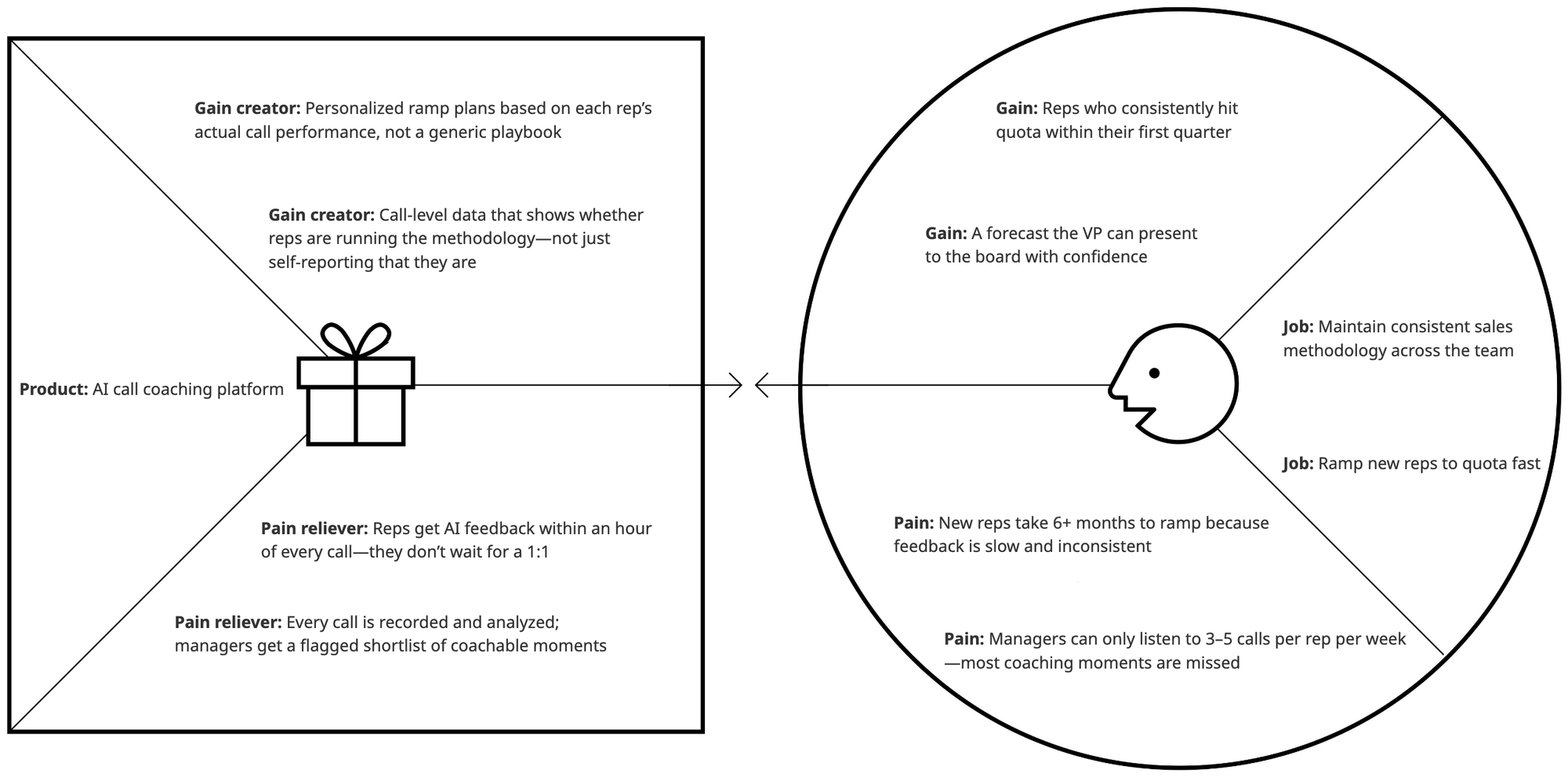
Always consult your lawyers, but for a quick breakdown of best practices, see Hunter’s guide to email outreach legal compliance.</li></ol><h2 id="the-four-whys-framework">The four whys framework</h2><p>When your prospect sees your email in their inbox, they aren't thinking about your company and your offer. For them, the main question is, why?</p><p>Every sales email needs to answer the four whys the prospect is asking themselves: </p><ol><li>Why are you emailing me? — answered by sharp targeting and relevance. </li><li>Why should I do anything? — answered by making inaction feel costly. </li><li>Why you? — answered by specificity and proof. </li><li>Why now? — answered by connecting to something current in their world. </li></ol><p>Most of this guide is about creating a prospecting and messaging strategy that helps you answer these four questions without skipping a beat.</p><p>We're not reinventing the wheel here. Salespeople practice answering these questions all the time. But they're rarely discussed in the context of the practical reality of sending email outreach every day.</p><p>The examples throughout the guide use a fictional SaaS company (Revo), but the framework applies to any B2B sale—agencies, consultancies, manufacturing, professional services.</p><h2 id="step-1-build-an-email-outreach-strategy-for-sales">STEP 1: Build an email outreach strategy for sales</h2><p>Before you find prospects, write emails, or open a database, you need three things:</p><ul><li>a clear understanding of what value you deliver (your value),</li><li>a specific deliverable that gives the prospect a reason to engage (your offer), </li><li>and a detailed picture of who you’re trying to reach (your ICP and buyer persona). </li></ul><p>These three things are equally foundational. </p><ul><li>Your value tells you what to say. </li><li>Your offer tells them what they get. </li><li>Your persona tells you who to say it to and how. </li></ul><h3 id="map-your-value">Map your value</h3><p>As a salesperson, you need to know what pain you’re solving and for whom. The Value Proposition Canvas gives you this. Subject lines come from your prospect’s pains. Opening lines come from their frustrations. Your pitch comes from how you relieve those pains and create the outcomes they want. </p><p>With it, you talk about the prospect.</p><p>The canvas has two sides.</p><p>The right side is the Customer Profile: what your prospect is trying to accomplish, what gets in the way, and what success looks like.</p><ul><li>Jobs to be done—functional (hit quarterly revenue target), social (be seen as a strong leader), or emotional (stop dreading the Monday pipeline review). Social and emotional jobs are often what actually drive decisions.</li><li>Pains—what frustrates them, what costs too much, what takes too long, what risks do they worry about?</li><li>Gains—the positive outcome they’d describe to their boss. Not just the absence of pain.</li></ul><p>The left side is your Value Map: how your product responds to each element of the customer profile.</p><ul><li>Products and services—the things a customer would point to and say “that’s what I bought.”</li><li>Pain relievers—how specifically you eliminate or reduce each pain.</li><li>Gain creators—how you create the outcomes they want.</li></ul><p>The power of this exercise is in drawing explicit lines between what you do and what they need. </p><p>When every pain has a reliever and every gain has a creator, you have fit. </p><p>It’s harder than it looks—expect to revise it as you learn from real conversations. But it's worth it. Your first version will have gaps, that’s expected and it's okay. Start with what you know and treat it as a living document.</p><p>We’ll walk through the rest of this guide with a running example: Revo, a fictional AI sales coaching platform that records sales calls and gives reps automated feedback.</p><p>Revo’s canvas for one segment—Heads of Sales at mid-market SaaS companies:</p>
Customer Profile
Value Map
Job: Ramp new reps to quota fast
Product: AI call coaching platform
Job: Maintain consistent sales methodology across the team
Pain: Managers can only listen to 3–5 calls per rep per week—most coaching moments are missed
Pain reliever: Every call is recorded and analyzed; managers get a flagged shortlist of coachable moments
Pain: New reps take 6+ months to ramp because feedback is slow and inconsistent
Pain reliever: Reps get AI feedback within an hour of every call—they don’t wait for a 1:1
Gain: Reps who consistently hit quota within their first quarter
Gain creator: Personalized ramp plans based on each rep’s actual call performance, not a generic playbook
Gain: A forecast the VP can present to the board with confidence
Gain creator: Call-level data that shows whether reps are running the methodology—not just self-reporting that they are
This canvas is now a menu for every email you’ll write. The pains become problem statements. The gains become outcomes you can promise. The pain relievers and gain creators are the proof.
Even better, alternative pain relievers and gain creators can be used across different emails so you always come with additional value instead of empty nudges.
STEP 2: Build your offer
Your value proposition is the problem you solve.
Your offer is what the prospect gets TODAY if they engage with you.
The gap between these two is where most outreach emails fail.
A VP of Sales is unlikely to reply to “we help sales teams ramp reps faster." They reply to “I can show you exactly where your new reps’ calls go off-track, based on a 10-call sample.” The first is about you. The second is about them, it’s concrete, and it’s something they can evaluate without committing to buy.
The offer is what makes email outreach work as a channel. Unlike inbound where the prospect has already raised their hand, outreach emails interrupt. The offer is the thing that justifies the interruption. It needs to deliver value on its own, before any sale happens.
This is why the offer is so important.
You can have perfect product-market fit on paper and still fail at outreach if your offer doesn’t give prospects a reason to engage.
You must give someone a reason to reply, and if the reason is good, related to a problem they have, and you don’t sound like everyone else… people will reply.
But to do so requires you to have something to offer them that’s not a chance to buy your product.

 <p>If you’re a salesperson or a founder and you want to use email outreach for sales, this guide will get you from zero to competent. It covers everything from finding prospects to writing and sending sales emails that get positive replies. </p><p>Whether you've just landed your first sales job, starting to look for more customers as a founder, or you're an experienced salesperson looking for a second opinion on your sequence, this guide is for you.</p><p>At the start, the most important thing to remember is that most sales emails are not having a good time.</p><ul><li>The average reply rate for sales outreach is 3%.</li><li>28% of decision-makers say they never, ever receive valuable sales emails.</li><li>Their top complaints: too sales-focused (65%), irrelevant to their role (61%), generic (48%).</li></ul><p>(These datapoints come from Hunter's annual State of Email Outreach report.)</p><p>Here’s an example of how sales emails go wrong. </p><p>Imagine you’re a VP of Sales at a scaling SaaS company. You’ve been sending sales emails and managing salespeople for the last 15 years. You open your inbox and find this:</p><div class="kg-card kg-callout-card kg-callout-card-blue"><div class="kg-callout-emoji">⛔</div><div class="kg-callout-text">Subject: Quick intro — Revo